 how-to
How to Choose a Gated Drop Yard for Trailer Security
Last Updated: November 1, 2026
Quick Summary
Gated drop yards benefit trailer fleets by limiting who can reach loaded trailers, creating a record of every entry, and allowing round-the-clock access for drivers on irregular schedules. The right choice also depends on the site's fencing, lighting, surveillance, and access method.
- Gated access limits who can enter the lot and makes unauthorized entry easier to spot.
- Each entry is recorded, which creates a usable record of who accessed the yard.
- Round-the-clock access suits fleets with irregular schedules.
- Ask how long camera footage is kept, since claims can be filed weeks later.
- Give each driver a unique code or card and remove access the same day they leave the fleet.
Table of Contents
- What a Drop Yard Is and How Gated Access Changes It
- Truck Drop Yard Security: The Benefits of Gated Access
- Secure Trailer Parking: How to Evaluate a Gated Yard
- Truck Yard Access Control: Setting Up Entry Procedures
- Trailer Theft Prevention: Limits of Gates and Managing Risk
- Booking Your Gated Drop Yard Space in Gainesville
- Frequently Asked Questions
What a Drop Yard Is and How Gated Access Changes It
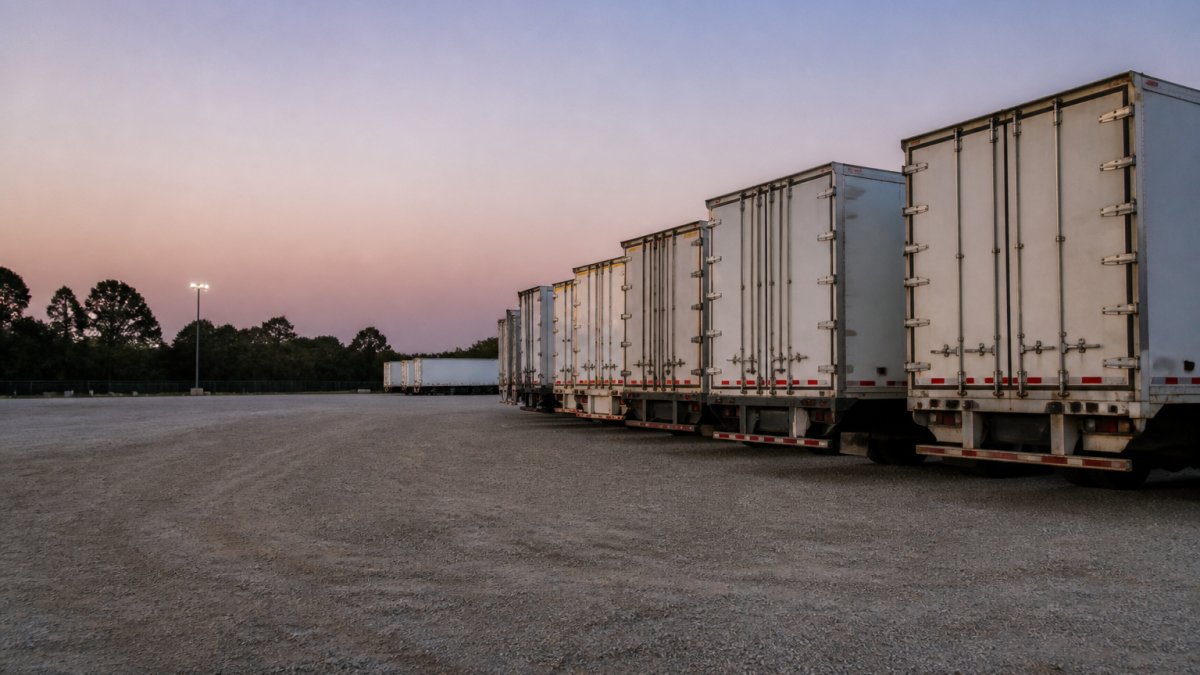
Gated drop yards for trailers raise the same questions every week. A drop yard is a secured lot where drivers leave a trailer and pick up another one. The trailer is "dropped," and the driver "hooks" a different one and moves on. Gated access decides who can enter and when, which is what separates a safe yard from an open lot.
Gated access changes the job in several ways. It limits who can reach the trailers, and it controls who enters and when.
Drop-and-hook operations in practice
Drop-and-hook works best when trailers are staged and ready. A driver arrives, drops a loaded trailer, and hooks a fresh one.
A common mistake is treating the yard as storage only. A drop yard is a throughput tool. If drivers wait at the gate, the efficiency gain disappears.
Truck Drop Yard Security: The Benefits of Gated Access
A gated yard can help protect trailers, though its benefits are specific.
Reduced theft and trespassing risk
A fence and a closed gate can limit casual access to a lot. Loaded trailers carry the most value, so this is where protection matters most.
- Limits who can enter the lot
- Creates a record of every entry
- Makes unauthorized access easier to spot
24/7 access and fleet throughput
Round-the-clock access matters for fleets with irregular schedules.
Secure Trailer Parking: How to Evaluate a Gated Yard
Not every gated yard is equal, and the difference shows up in your operating cost, not just your security posture. Compare secure overnight parking options before you decide. Use this checklist to compare facilities on the things that actually move the numbers.
Site and access checklist
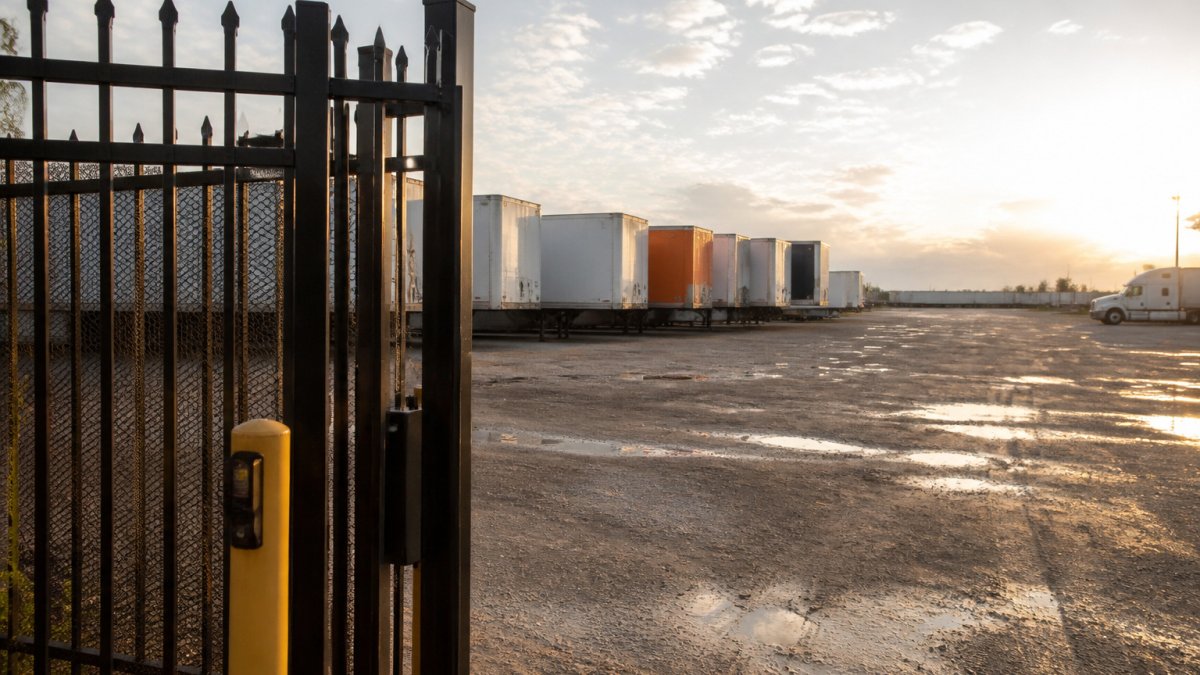
- Fencing and gate: Is the perimeter complete, and does the gate close and lock fully? Walk the fence line and look for gaps a person could slip through.
- Lighting: Is the lot well lit at night, with no dark corners? Ask when the lights were last inspected.
- Surveillance: Are cameras covering the gate and the trailer rows, and how long is footage retained? Retention matters when a claim is filed weeks later.
- Access method: Can your drivers enter with a unique code or card at any hour, and can the operator revoke access the same day?
- Location: How far is the yard from your route? Extra miles cost money in fuel and driver hours, so measure the detour, not just the straight-line distance.
- Capacity: How many trailer spots are available, and what is the yard's typical fill rate? A yard that runs near capacity will slow your drop-and-hook turns.
- Records: Does the operator keep entry logs you can review, and for how long?
- Staffing: Is someone on site during peak hours, and who answers the phone at 2 AM?
Pricing models and total cost
Pricing depends on the size of your trailer, the length of your stay, and how often you access the yard. Current rates are available on our website. Ask specifically about:
- Base storage rate and what it includes
- Any access or administrative fees
- Minimum stay or notice period before you can cancel
Compare the all-in monthly cost against the alternatives. Compare the total cost of each option against your needs for reserved spaces, controlled access and handling. The right choice depends on how many turns your trailers make each week and how much a delayed driver costs you.
Use-case comparison
| Facility type | Best for | Watch out for |
|---|---|---|
| Gated drop yard | Fleets needing reserved, controlled trailer staging | Access fees and capacity limits |
| Truck stop | One-off overnight parking | No reserved spot, limited security |
| Private yard | Fleets with steady volume and staff to manage it | Maintenance and liability fall on you |
| Warehouse | Loads that need handling or cross-docking | Rarely 24/7 driver access |
| Ungated lot | Low-value or short-term storage | Theft and trespass exposure |
Ask for a site visit before you sign anything. Bring this checklist and score each yard the same way so the comparison is fair.
Truck Yard Access Control: Setting Up Entry Procedures
Good access control needs clear rules everyone follows.
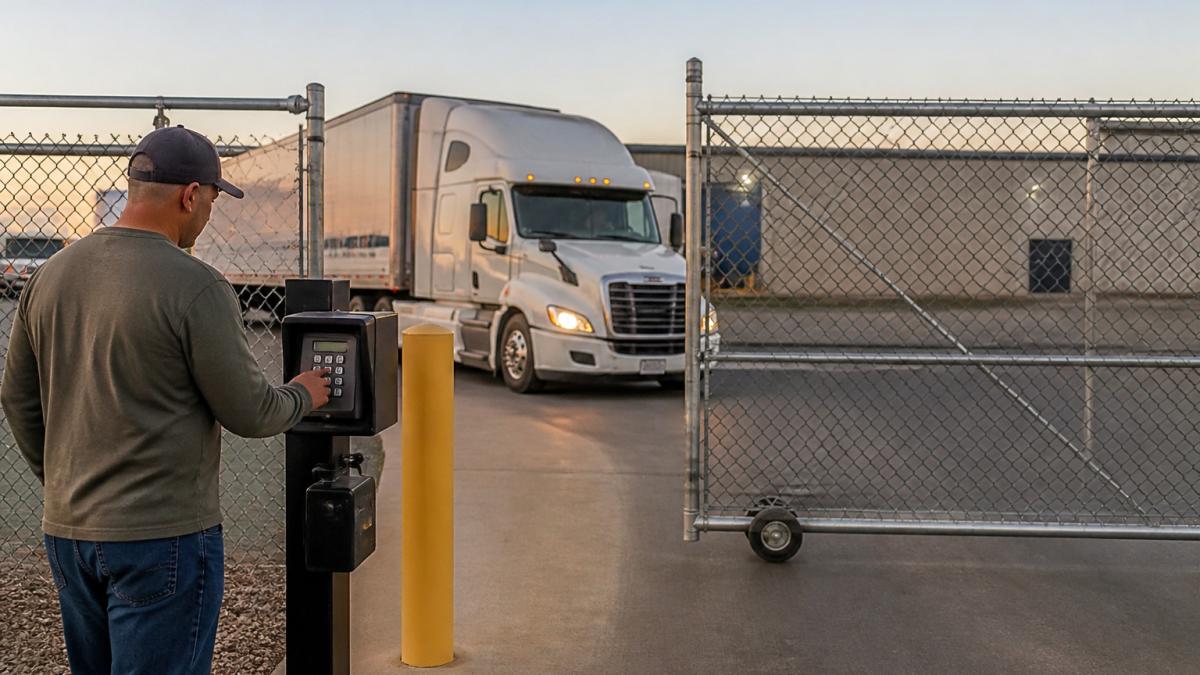
- Issue each driver a unique code or card. Never share codes.
- Set which trailers each driver may move.
- Log every drop and hook with time, driver, and trailer number.
- Remove access the same day a driver leaves your fleet.
- Review the logs weekly to catch unusual activity.
Watch out: Shared gate codes are the most common access failure. Once a code spreads beyond your drivers, the record is useless.
Trailer Theft Prevention: Limits of Gates and Managing Risk
A gate is one layer of protection, not the whole plan. Gates can be climbed, cut, or left open by a careless entry.
What a gate does and does not do
A gate controls who enters. It does not by itself verify that the person inside is authorized to move a specific trailer.
Layered safeguards
- Lock trailer doors and kingpins, and use wheel locks where you can
- Keep high-value loads in the most visible rows, not the back corner
- Walk or check the yard on a set schedule, and vary the times
- Report any gate damage or missing lock right away
- Use trailer tracking or GPS on high-value equipment so a missing trailer can be located quickly
- Require photo or document confirmation at drop and hook so the chain of custody is clear
Cargo-specific safeguards
Not every load needs the same protection. High-value electronics, pharmaceuticals, and food and beverage loads carry different risk profiles. For high-value cargo, ask whether the yard offers extra lighting, dedicated rows, or seal checks at the gate. For food loads, confirm the yard does not expose trailers to standing water or excessive heat. For any load, record the seal number at drop and verify it at hook.
Insurance and incident response
Read the operator's security terms before signing, and confirm the details of coverage with your own insurer.
Have a written incident response plan covering who to call and how quickly to file a claim.
Booking Your Gated Drop Yard Space in Gainesville
Truck Parking Gainesville offers secure, reliable parking for trucks, trailers and heavy machinery. Check our current rates on our website, since pricing depends on the size of your vehicle and the length of your stay. We recommend a site visit first.
Frequently Asked Questions
What is a drop yard in trucking?
A drop yard is a secured lot where drivers leave a trailer for later pickup, so the driver can continue on the route without waiting for the freight to be loaded or unloaded. Drop-and-hook operations rely on these yards to reduce dwell time. Before using one, confirm the yard's access hours and how gate permissions are issued.
Can drivers access a gated drop yard 24/7?
Ask whether drivers arriving at 2 AM or 4 PM need prior approval each time, and what happens if a driver is delayed. Flexible access is valuable for fleets with irregular schedules.
What security features should a truck drop yard have?
Look for perimeter fencing, a gate with automated or monitored access control, surveillance cameras covering entry points and the trailer rows, and lighting that stays on overnight. Ask whether staff are present during night hours or whether monitoring is remote. Gates reduce casual trespassing and make unauthorized entry easier to detect, but they do not stop determined thieves on their own, so combine them with the other controls listed here.
How can a gated drop yard help fleet efficiency?
A gated drop yard lets drivers drop a trailer and leave without waiting on a loaded or unloaded trailer. To measure any effect on your operation, track turnaround time, driver dwell time and trailer idle days before and after switching yards.